>
 TaxCalc.pk
FY 2026-27
TaxCalc.pk
FY 2026-27
Comprehensive guide to non-patentable subject matter in Pakistan under Section 7 of Patents Ordinance 2000: scientific theories, software, methods of treatment,
By Syed Asad Hussain Zaidi · 7 September 2026
Author Note / Last Updated: Updated September 2026 by Syed Asad Hussain Zaidi | Advocate High Court | Professional Tax Consultant
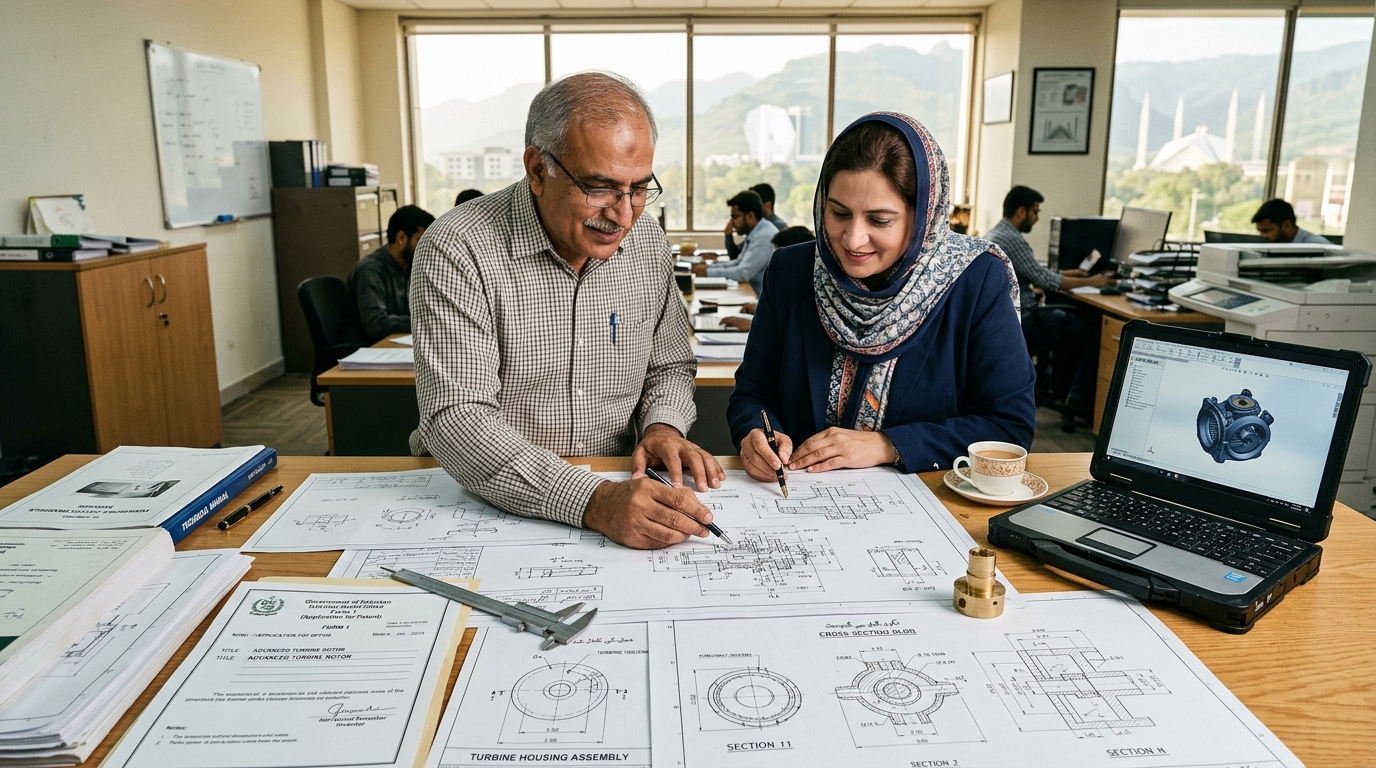
Inventing something new and useful is an incredible achievement, but it does not guarantee a patent. The Patents Ordinance, 2000, places strict limitations on what the Government of Pakistan considers a "patentable invention."
The logic behind these exclusions is public policy: the state refuses to grant a 20-year commercial monopoly over fundamental scientific truths, agricultural basics, or things that contradict public morality.
Before you invest hundreds of thousands of rupees in patent drafting fees, you must ensure your invention does not fall under the statutory exclusions outlined in Section 7 of the Patents Ordinance.
You cannot patent a discovery of something that already exists in nature, nor can you patent an abstract theory or math formula.
Patents protect functional inventions (how things work). They do not protect creative expression.
You cannot patent the rules of a game or a method of doing business.
Public health policy dictates that doctors must be free to save lives without paying royalties for the surgical techniques they use.
The state will not grant a monopoly over an invention that is deemed highly offensive to the religious, moral, or social fabric of Pakistan.
This is the most controversial exclusion in the modern tech era. Under the literal text of the law, a computer program is not patentable.
You cannot get a new patent simply by finding a new use for an old, already known chemical.
Understanding the exclusions under the Patents Ordinance is the very first step in your R&D journey. If your "invention" falls into one of these restricted categories, you must pivot your IP strategy. Instead of a patent, you may need to rely on Trade Secrets, Copyrights, or Industrial Designs to protect your commercial edge.
Disclaimer: Patent eligibility is a highly litigated area of law. This guide provides a summary of Section 7 of the Patents Ordinance, 2000, as of 2026. Always consult a registered Patent Agent to determine the exact eligibility of your technology.
Legal & Statutory Notice: The information provided in this publication is for general educational, academic, and statutory informational purposes only under the relevant laws of Pakistan (including the Income Tax Ordinance, 2001, the Companies Act, 2017, and the Trade Marks Ordinance, 2001). This content does not constitute formal legal, financial, or tax advice. For specific assessments, consult a licensed Advocate or qualified tax professional.